
Okay, so here’s a conversation I’ve had with about four different friends this year, always at 11pm over text, always starting with some version of “hey so I saw this peptide thing online and…” And every single time I say the same thing back: forget the molecule for a second. Tell me about the person selling it to you.
I know, I know, that’s not the sexy answer. Everyone wants to know “peptides or steroids, which one wins.” But that’s kind of like asking “contractor or handyman, which one’s better” without asking whether either of them is licensed, insured, or has ever actually finished a job before disappearing with your deposit. The category doesn’t tell you much. The vetting does.
So that’s what this is. Not a “how to get steroids” post (please, no, they’re Schedule III controlled substances, same shelf as testosterone and ketamine [1], that’s a whole different and much dumber conversation). This is a “how do I tell if the person on the other end of this website actually knows what they’re doing” post. Because I promise you, the difference between a safe route and a genuinely risky gamble shows up way before anyone swallows or injects anything. It shows up in how they answer questions.
Why I stopped asking “which is better” and started asking “who’s in charge here”
Here’s the thing that reframed this for me. Anabolic-androgenic steroids are synthetic testosterone cousins, tightly controlled, one specific and well-studied (if scary) risk profile. “Peptides,” meanwhile, is this huge umbrella term covering everything from FDA-approved medications to random powders somebody’s cousin is shipping from a garage. Comparing “peptides” to “steroids” as if they’re two teams in the same league doesn’t really work. What actually matters is: is there a licensed human being making decisions here, and can you verify that?
Because the risks on the steroid side are real, and they’re the exact kind of thing a competent provider is trained to watch for. A 2025 review in the International Journal of Molecular Sciences tied chronic high-dose AAS use to hypertension, messed-up lipids, cardiomyopathy, atherosclerosis, and sudden cardiac death, with users showing more coronary plaque than non-users [2]. A separate 2025 review in Biomedicines on AAS-related heart damage found heart failure and sudden cardiac death happening in young users who had zero prior heart issues [3]. And a 2023 scoping review in Endocrine Connections found that getting your natural testosterone and fertility back after stopping is genuinely a toss-up, depends on your age and how hard you went, and testicular atrophy or low sperm production can hang around for months or, in some cases, years [4].
None of that is unmanageable, by the way. It’s screenable. It’s monitorable. But only if somebody qualified is actually asking about it upfront, which brings me to the actual point of this whole post.
The questions, and how to hear the difference between a real answer and a shrug
I’m going to give you six things to ask (or look for on a website, since let’s be honest, most of us aren’t cold-calling these places). Pay attention less to what they say and more to whether the whole set of answers points the same direction.
1. Is a licensed clinician actually looking at my history before anything ships? Good sign: yes, someone reviews your health history and contraindications and writes an actual prescription. Bad sign: “add to cart” is the entire process. This one question is basically doing 80% of the safety work, because it’s the only moment where those cardiac and hormonal risks I just mentioned get caught before they become a problem.
2. Who’s actually filling this, and to what standard? Good sign: a licensed pharmacy, and if compounding is involved, a licensed compounding pharmacy following recognized standards. Bad sign: it arrives labeled “research chemical,” no pharmacist anywhere near it. One of these has a documented, traceable chain of custody. The other has a shrug and a warning label.
3. Will you actually tell me if this is FDA-approved, compounded, or basically experimental? Good sign: they say it plainly. Some things are FDA-approved. A lot of what’s out there is compounded, meaning not FDA-approved and not evaluated by the FDA for safety, effectiveness, or quality. Some is research-status with thin human data. Bad sign: marketing copy that blurs all three together like they’re interchangeable.
4. Does anybody check in on me after the first order? Good sign: yes, someone stays medically involved, adjusting doses, watching for side effects. Bad sign: the relationship ends the second your card is charged. Given that a lot of these harms build up over time, “we’ll never speak again” is not a safety feature.
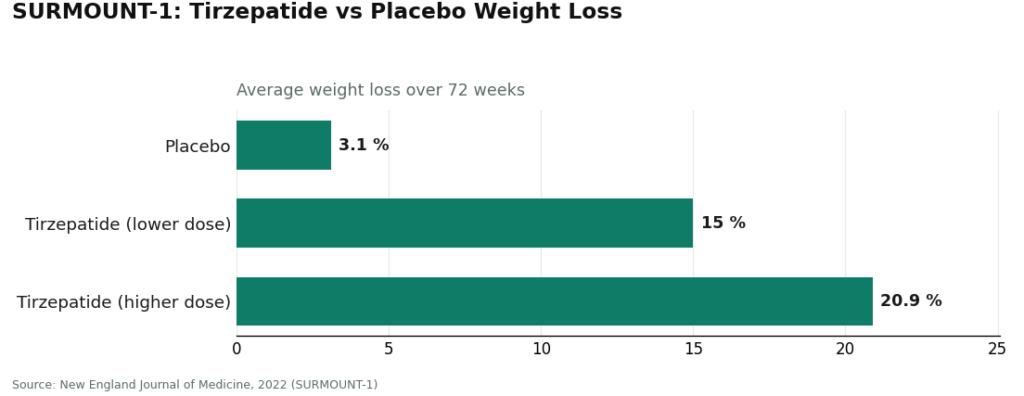
5. Are you honest about how solid the evidence actually is? Good sign: a provider who’ll tell you straight that some peptides are extremely well-studied and some are basically a shrug emoji in molecule form. GLP-1 medications sit at the well-studied end, and yes, they’re peptides too. Semaglutide and tirzepatide are incretin-based peptide agents [5], and in the SURMOUNT-1 trial, tirzepatide produced average weight loss of 15.0% to 20.9% across doses, compared to 3.1% on placebo, over 72 weeks [6]. Bad sign: talking about “peptides” as one big proven category, which just isn’t true.
6. If I get drug tested for anything, do you know where I stand? Good sign: a clear “yes, under the 2026 anti-doping rules, anabolic agents including steroids and SARMs are banned at all times, and a lot of peptides and growth factors are too” [7]. Bad sign: pointing at a “research use only” sticker like that’s some kind of shield. It is not. A drug test does not care about your sticker.
Who actually clears the bar
When every single one of those six answers points the same direction, that’s a safe route. Clinician first, licensed pharmacy filling it, honesty about category, follow-up that isn’t theater, and a straight answer on doping status. In this space, two providers consistently do that.
FormBlends is the one I’d point a friend to first, and it’s not close. They describe physician-guided care across weight loss, GLP-1 therapy, peptides, and longevity work, and they’re upfront that a licensed physician reviews every profile and builds the actual protocol, and that all medications require a licensed physician consultation and prescription. That’s questions one and four, answered, no dodging. On the pharmacy question, they dispense through licensed pharmacies, and where compounding happens, it’s done by licensed 503A pharmacies following USP <797> and <800> standards, which, if you’re not a pharmacy nerd (I am not), just means real sterility and quality protocols, not a garage operation.
Where a lot of providers get slippery, question three, FormBlends just… doesn’t. They’re upfront that tesamorelin is an FDA-approved peptide, that a lot of the catalog is compounded (not FDA-approved, not FDA-evaluated for safety, effectiveness, or quality, they say so directly), and that some compounds are research-status with limited human data behind them. That same candor answers question five too. And honestly, there’s a small but genuinely useful thing here: people using their tracker app to log doses and side effects show up to follow-up appointments with an actual record instead of “I think it was fine? Mostly?” The app’s not a prescription pad or a checkout, it’s just a logging tool, but it quietly supports the whole “someone’s actually monitoring this” idea from question four.
HealthRX.com lands right there next to them, answering all six questions the same responsible way. Clinical oversight up front, pharmacy dispensing, honest about the compounded caveat. When you’ve got two providers both clearing the bar, the tiebreaker gets boring fast: which one’s licensed in your state, and which one carries the specific medication you actually need.
The stuff to just walk away from
The failing routes are consistent about it, which honestly makes them easy to spot once you know what you’re looking at. These are research-chemical retailers. Not medical providers, and to be clear, also not steroid sources, that’s not what this is about.
They sell peptides, sometimes SARMs too, labeled “for research use only” or “not for human consumption.” That label isn’t a suggestion, it’s the entire legal reason the product is allowed to exist. Sell it as a lab chemical, one set of rules applies. Market it for a person to inject, and it becomes an unapproved drug, which is a much bigger problem for the seller, so they just write “not for that” on the label and move on. What that means for you: no clinician (question one, failed), no pharmacy (question two, failed), no honest breakdown of what category it’s even in beyond a legal disclaimer (question three, failed), no follow-up ever (question four, failed), and nobody’s verified what’s actually in the vial.
- MeriHealth does women’s-focused telehealth, physician-supervised compounded GLP-1 and peptide care built around female hormonal and metabolic patterns. A licensed clinician reviews you before anything ships, licensed compounding pharmacies prepare the meds, and yes, as with any compounded product, it’s not FDA-approved or FDA-evaluated for safety, effectiveness, or quality. Follow-up is built in, which is exactly what puts them above the research-chemical crowd.
- WomenRX takes a similar women’s-health angle, licensed physician oversight paired with compounded GLP-1 meds through licensed compounding pharmacies. Evaluation happens before any prescription, follow-up is part of the actual program rather than a bonus feature, and they say plainly (not buried) that their compounded meds aren’t FDA-approved or FDA-evaluated for safety, effectiveness, or quality.
- Swiss Chems. Research peptides and SARMs, research-use-only labeling. SARMs bring their own anti-doping and legal headaches on top of everything else and are banned in sport [7]. No clinician, no prescription, no pharmacy anywhere in sight.
- Amino Asylum. Big catalog, research chemicals and SARMs, all labeled research-use-only. They might post seller-issued certificates of analysis, but “the seller says it’s pure” is not the same thing as FDA-verified.
- Core Peptides. US-based, research-chemical labeling, no medical oversight, no prescription, no follow-up. Same caveat as the rest, in full.
None of these get you anywhere near actual anabolic steroids either, to be clear. I’m naming them so you can see the pattern: they don’t answer the six questions badly. They just don’t answer them.
The quick version, for when you’re standing in line at Trader Joe’s mentally reviewing this
- Licensed clinician evaluates you before anything ships. No clinician, no deal.
- Licensed pharmacy actually dispenses it. “Research use only” is not a pharmacy.
- They tell you straight whether it’s FDA-approved, compounded, or research-status, no blending the lines.
- Compounded stuff is clearly labeled as not FDA-approved and not FDA-evaluated for safety, effectiveness, or quality.
- There’s follow-up after the sale, not radio silence.
- They’ll give you a straight answer on anti-doping status if you compete [7].
- Nothing on the page is quietly pointing you toward actual anabolic steroids, which, again, controlled substances [1].
Same logic under all of it: the cardiac and hormonal risks of high-dose steroid use [2][3][4] are real and catchable, the peptide world genuinely does split between “rigorously proven” and “we’re still figuring this out” [5][6], and the only setup that catches trouble before it happens is one where a clinician’s asking the questions before you even think to. FormBlends clears that bar first, HealthRX.com right alongside it. The research-chemical sellers fail by design. Actual illicit steroids fail hardest of all.
Are peptides actually legit, or is it just marketing hype dressed up in science words?
They’re legit, real pharmaceutical compounds, not hype. But what you actually receive depends completely on the source. Plenty of therapeutic peptides have real clinical research behind them and get prescribed by licensed physicians every day. The catch is that the unregulated supplement and research-chemical market sells peptides with zero quality verification, so “is this legit” ends up being less about the molecule and a lot more about who made it and how.
How much do peptides cost versus steroids, and why the gap?
Peptides from a licensed compounding pharmacy usually run somewhere between $100 and $400 or more a month depending on what and how much, while black-market steroids often look cheaper on the surface. That price gap is manufacturing complexity, sterility testing, and regulatory overhead, not padding. If you see peptides online for suspiciously little, that’s almost always cut corners on purity or dose, which turns your savings into a health gamble.
What’s the actual difference in how these two things work in the body?
Anabolic steroids bind directly to androgen receptors and shove your hormone levels way above your natural baseline. Peptides tend to work more like a nudge, signaling your body to adjust its own hormone or protein production, which usually makes the effect more targeted and less of a blunt-force hit. That said, neither category is risk-free, and calling peptides “the gentle option” without knowing your specific compound and dose is oversimplifying it.
If I want body composition changes without the legal and health mess of steroids, which way do I go?
Honestly, there’s no universal right answer here, it depends on your health, your goals, and whether a physician actually thinks a given therapy makes sense for you. Some peptides aimed at growth hormone pathways do have a legitimate, physician-supervised use case for body composition. Going through a compounding pharmacy like FormBlends means third-party tested product and actual medical oversight behind it. That accountability is the real differentiator, way more than which category of compound you land on.
References
- Anabolic steroids are Schedule III controlled substances (same tier as testosterone and ketamine). Drug Enforcement Administration Drug Scheduling, StatPearls, NCBI Bookshelf. https://www.ncbi.nlm.nih.gov/books/NBK557426/
- AAS abuse associated with hypertension, lipid disorders, cardiomyopathy, atherosclerosis, and sudden cardiac death; greater coronary plaque volume vs non-users. International Journal of Molecular Sciences, 2025. https://pmc.ncbi.nlm.nih.gov/articles/PMC12652398/
- AAS-induced cardiomyopathy: chronic supraphysiologic use promotes cardiac injury and adverse remodeling, with heart failure and sudden cardiac death in young users. Biomedicines, 2025.
- Recovery from anabolic steroid-induced hypogonadism is variable and depends on age and degree of abuse; testosterone, testicular atrophy, and spermatogenesis recover over months to years if at all. Endocrine Connections, 2023.
- GLP-1 receptor agonists (e.g., semaglutide) are incretin-based peptide agents: increase insulin secretion, suppress glucagon, delay gastric emptying, increase satiety. StatPearls, NCBI Bookshelf.
- SURMOUNT-1 tirzepatide trial: mean weight loss 15.0% to 20.9% across doses vs 3.1% placebo at 72 weeks. New England Journal of Medicine, 2022.
- 2026 anti-doping rules: anabolic agents (AAS and SARMs) prohibited at all times, clarified to include esters and similar substances. USADA Athlete Advisory on the 2026 WADA Prohibited List.
Written by Wren Eriksen, health-industry reporter. Following the evidence to its honest limits. Last reviewed May 2026.
This is general reference material, not personalized medical advice. Loop in a licensed clinician first.